
Sushi & Japanese Food Guides
How to Eat Sushi: A Friendly Guide to Soy Sauce, Wasabi, Ginger and Chopstick Etiquette
A relaxed guide to how to eat sushi: hands or chopsticks, dipping in soy, wasabi, ginger, eating order and the chopstick habits to avoid.
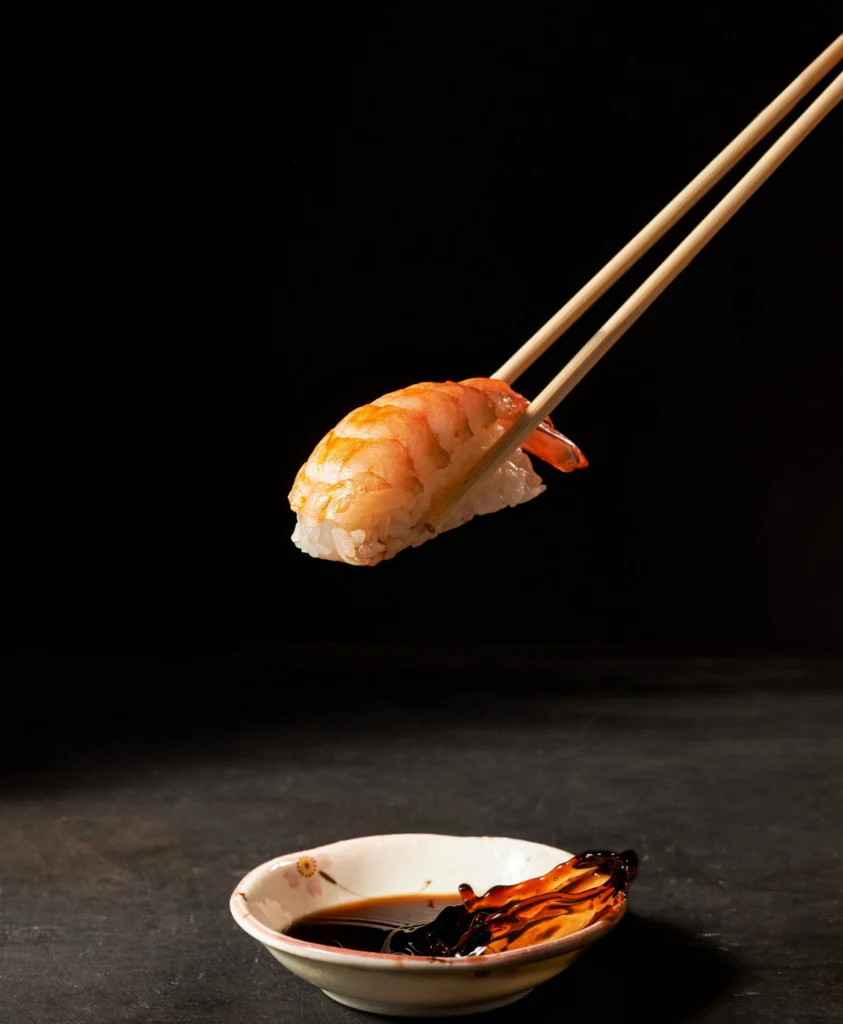
Knowing how to eat sushi really comes down to a handful of small habits: touch the fish side lightly to the soy sauce, try to finish each piece in one bite, and save the pickled ginger for between pieces. Fingers are perfectly proper for nigiri, and chopsticks are just as correct. At Sushi Go-En in Salisbury we care far more that you enjoy your plate than about perfect technique.
Quick answer: Good sushi manners are simple, and nobody expects perfection.
- Nigiri can be eaten with clean fingers or with chopsticks; both are traditional.
- Roll the piece onto its side and dip only the fish into the soy sauce, so the rice holds together.
- Pour a small puddle of soy sauce and top it up later instead of filling the dish.
- Pickled ginger (gari) refreshes your palate between pieces; it is not a topping.
- Never stand chopsticks upright in rice or pass food from one pair of chopsticks to another.
How to eat sushi: should you use your hands or chopsticks?
Both are correct. Nigiri began life as a quick snack sold at street stalls in old Edo, now Tokyo, and plenty of diners in Japan still pick it up with their fingers at the counter. Chopsticks are equally polite and are the normal choice for sashimi, which is never eaten by hand. Choose whichever gives you the steadiest grip.
If you go the fingers route, wipe your hands first, then lift the piece between your thumb and your middle finger, with your index finger resting lightly on top of the fish. That three-point hold stops the rice from collapsing. Turn your wrist so the topping faces down as it heads towards the soy dish and then into your mouth.
Rolls are just as easy by hand, since the seaweed wrap keeps everything contained. The one exception is anything without rice: slices of raw fish on their own are picked up with chopsticks every time, so keep a pair close by even if you prefer fingers for the rest.
How to use chopsticks for sushi
Rest the lower stick in the crook between your thumb and index finger, supported by the tip of your ring finger, and keep it still. Hold the upper stick the way you would hold a pen, so it pivots against the lower one. Only the top stick should move.
When you reach for a piece of nigiri, do not try to pinch it from above, because the rice will split. Instead, gently tip it onto its side, then grip it across the fish and the rice at the same time. From that position it is a short, natural turn to bring the topping down to the soy sauce. Use light pressure; a firm squeeze is the most common reason a piece breaks apart halfway to your mouth.
If you are still getting the hang of it, start with rolls. Their firm, round shape is forgiving, and a few plates of practice usually builds enough confidence to move on to nigiri. The history of chopsticks stretches back thousands of years across East Asia, so you are joining a very long line of learners.
How do you dip sushi in soy sauce?
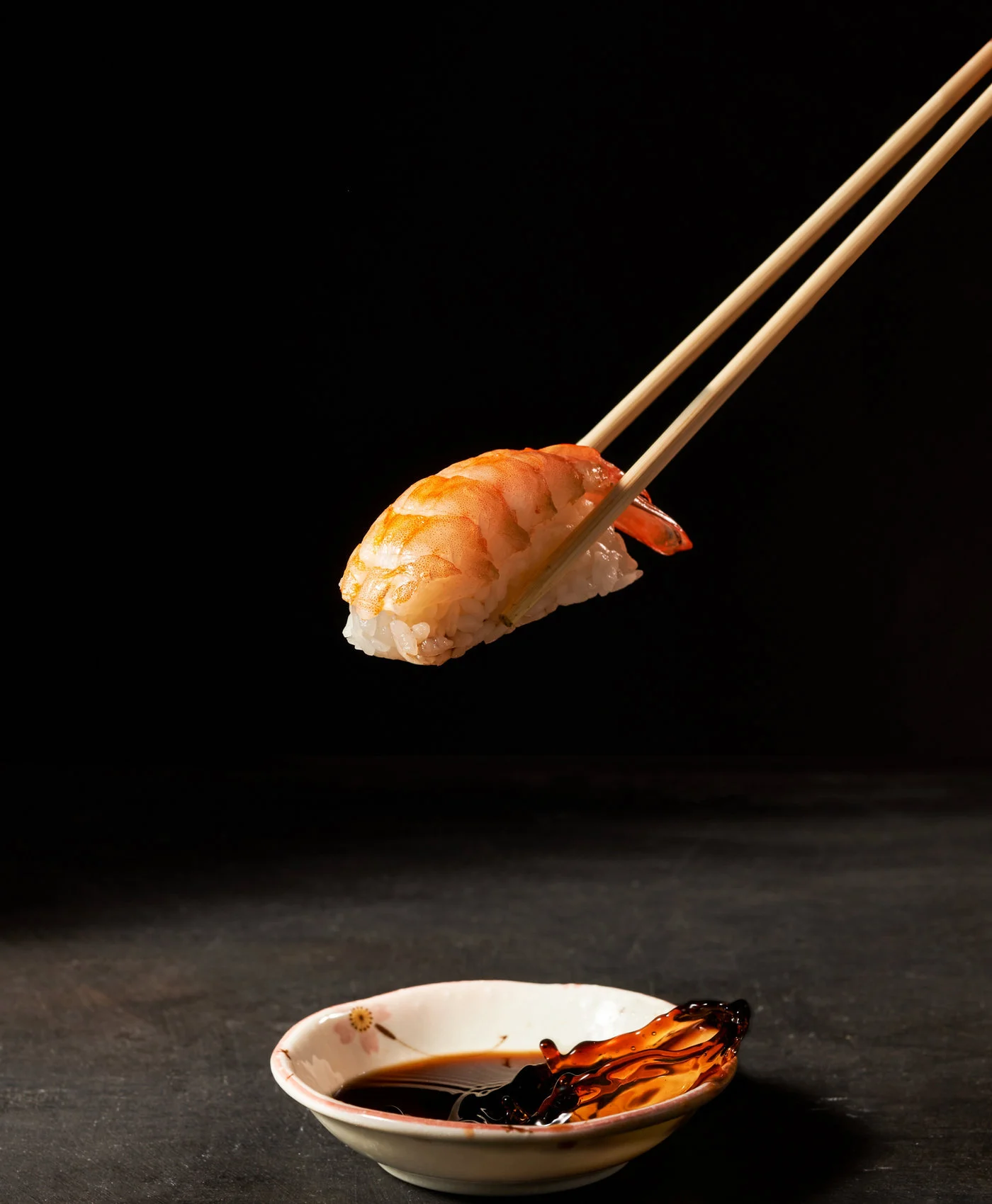
Turn the piece over and touch the fish, not the rice, to the soy sauce for about a second. Seasoned sushi rice behaves like a sponge, so dunking it rice-first soaks up far too much salt and often leaves grains floating in your dish. A quick, light touch lets the topping shine while the seasoning stays in balance.
How much soy sauce should you pour?
Less than you think. A shallow pool that just covers the base of the small dish is plenty for several pieces, and you can always add a little more as you go. Many Japanese diners see a dish left brimming with unused sauce as a little wasteful, so pouring modestly is quietly respectful.
It also tastes better. Soy sauce is rich in salt and savoury depth, and a heavy hand can drown delicate fish entirely. Think of it as seasoning, the same way you would salt a steak rather than soak it.
What about rolls and pieces that already have sauce?
For rolls, dip just one cut edge briefly, or touch the seaweed side to the dish. With inside-out rolls, the rice is on the outside, so keep the contact to a quick tap. Anything that arrives glazed, drizzled or flame-torched usually needs little or no soy at all. Our Aburi Wagyu, for example, is seared for a smoky finish, so taste a piece plain before you reach for the bottle.
How should you use wasabi and pickled ginger?
Wasabi adds heat and a clean, sharp lift, while the thinly sliced pickled ginger, called gari, resets your palate between pieces. If you want extra warmth, place a small dab of wasabi straight onto the fish. Eat a slice of ginger on its own after a piece, rather than laying it on top of your sushi.
Should you mix wasabi into soy sauce?
It depends who you ask. At a traditional counter in Japan, the sushi chef usually tucks a measured amount of wasabi between the fish and the rice, so the piece is already seasoned the way they intended. That is why some purists wince at stirring a green paste into the soy dish: it muddies the sauce and flattens both flavours.
Outside Japan, mixing the two is common and nobody blinks. Our relaxed take is this: if a soy-and-wasabi slurry is how you enjoy sushi, go ahead. If you would like to try the traditional way, dab a little onto the topping instead and notice how the heat rises through your nose and fades quickly. Real wasabi comes from a plant related to mustard and horseradish, and much of what is served around the world is a horseradish-based blend, so strength varies from place to place.
What is gari for?
Gari is young ginger sliced paper-thin and pickled in sweetened vinegar. Its job is to clear away the taste of one piece before the next, which matters most when you move from a rich, oily fish to something lighter. Have a slice between pieces, not with them.
Two habits to skip: piling ginger onto a piece of nigiri as if it were a garnish, and dipping it in soy sauce. Both hide the flavours you are trying to taste. A single slice is usually enough to refresh your mouth, and you can come back to it as often as you like through the meal.
Should you eat sushi in one bite?
Ideally, yes. A piece of nigiri is shaped so the topping, rice and seasoning land on your tongue together, and biting it in half usually leaves the remainder crumbling. If a piece is too large for you, two bites are completely fine; just hold onto the second half rather than putting a bitten piece back on the plate.
When people ask us how to eat sushi properly, we explain that the one-bite idea is less about strict manners and more about flavour. The sushi chef balances fish and rice in each mouthful, and eating it whole is the best way to taste that balance as intended. It also means fewer chances for the rice to fall into your soy dish.
What if a roll is too big for one mouthful?
Large rolls packed with fillings can be a stretch for anyone. Take a comfortable bite, keep the rest held in your chopsticks or fingers, and finish it straight after. Avoid tearing a piece in two with your chopsticks, which tends to scatter the filling across the plate. At home, a sharp knife wiped with a damp cloth between cuts will slice a big roll cleanly into smaller rounds.
What if you drop a piece?
It happens to everybody, including people who grew up with chopsticks. If a piece lands in your soy dish, lift it out with your chopsticks and eat it; a few stray grains of rice are nothing to worry about. If it falls on the table, pick it up, set it on the edge of your plate and carry on. Our staff have seen it all, and a dropped piece will never earn you a second glance.
How to eat sushi in the right order (and how to eat sashimi)
Begin with mild, lean flavours and finish with rich, smoky or sauced ones. Delicate fish and plain pieces shine brightest early, before stronger flavours crowd in, followed by salmon and fattier cuts, with flame-torched and sweet-glazed pieces saved for last. Treat it as a gentle guide rather than a rule, and let your appetite decide.
A typical progression looks like this:
- Light and lean: white fish, simple vegetable pieces and anything lightly seasoned.
- Medium richness: salmon and lean tuna, which carry more natural oil.
- Rich and fatty: fattier cuts that coat the palate.
- Smoky and seared: aburi pieces, where a flame has caramelised the surface.
- Bold finishes: sauced rolls and anything fried or crunchy, such as our light, crisp tempura.
On a sushi train you take plates as they pass, so a perfect sequence is not always possible. That is fine; a slice of ginger between plates does most of the work of resetting your taste buds. If the moving belt itself is new to you, how plates travel and get picked up on our Salisbury sushi train is covered in a separate post, and what separates nigiri, maki and aburi before you eat them has its own explainer.
How do you eat sashimi?
Sashimi is sliced raw fish served without rice, and it is always eaten with chopsticks. Put a tiny amount of wasabi directly on a slice, fold it over if you like, then dip just one corner into your soy sauce. Because there is no rice to soften the seasoning, a light touch matters even more here.
Eat each slice whole where you can, and enjoy the plate before moving on to heavier dishes. Any shredded radish or leaves served alongside are there to refresh between slices and are fine to eat. If you would like to try it with us, our fresh, thinly sliced sashimi is a good place to practise, and the Fresh Salmon Rice Bowl is an easy next step for anyone who wants raw fish with rice underneath.
What are the chopstick rules in sushi etiquette?
The chopstick taboos that matter most in Japan come from funeral customs, which is why they feel serious to Japanese diners. Never stand chopsticks upright in a bowl of rice, never pass food from your chopsticks to someone else’s, and avoid pointing or waving them at people. Most other guidance is simply about tidiness and care.
- Standing them in rice: chopsticks planted upright recall the incense offered to the dead, so lay them down instead.
- Chopstick-to-chopstick passing: this echoes the way bones are handed between relatives after a cremation. To share a piece, place it on the other person’s plate.
- Pointing: gesturing at someone with chopsticks comes across as aggressive, even mid-conversation.
- Rubbing disposable chopsticks together: scraping a new pair of wooden chopsticks hints that you think they are cheap. If there is a splinter, pick it off quietly.
- Stabbing food: spearing a slippery piece is understandable, but it is seen as clumsy. Lift it or ask for help.
- Serving with the wrong end: rather than flipping your own pair around to take from a shared plate, which some people dislike, use a separate pair kept for serving.
Between mouthfuls, rest your chopsticks together on a chopstick rest, or on the edge of your plate or soy dish, with the tips pointing away from your neighbour. With disposable chopsticks, the paper sleeve folds neatly into a small rest. The wider world of Japanese etiquette includes plenty more customs, but these few cover almost every sushi meal.
| Situation | Do | Don’t |
|---|---|---|
| Picking up nigiri | Use fingers or chopsticks, gripping the piece on its side | Pinch from above so the rice splits |
| Dipping in soy | Touch the topping to the sauce briefly | Soak the rice until it falls apart |
| Pouring soy | Start with a shallow pool and top up | Fill the dish to the brim |
| Wasabi | Dab a little on the fish if you want more heat | Worry about it; mixing is fine if you prefer |
| Ginger | Eat a slice between pieces | Pile it on top as a garnish |
| Bite size | Aim for one mouthful, or two if needed | Return a bitten piece to the plate |
| Resting chopsticks | Lay them together on a rest or plate edge | Stand them upright in rice |
| Sharing | Place food on a friend’s plate | Pass it directly between chopsticks |
What do you say before and after eating sushi?
Say itadakimasu before your first bite and gochisousama deshita once you finish. The first is a thank you to everyone and everything that brought the meal to the table, from the farmers and fishers to the cooks. The second thanks the people who prepared and served it. Both are warmly received, whatever your accent.
Itadakimasu sounds roughly like “ee-tah-dah-kee-mahs”, usually said with hands pressed together and a small nod. Gochisousama deshita is closer to “go-chee-soh-sah-mah desh-tah”. In a Japanese home, the cook might reply with osomatsusama deshita, a modest way of saying the meal was nothing special.
Finishing every grain of rice is another quiet compliment in Japan, as it shows you enjoyed what you were given. These little rituals fit our name well. Go-en describes a fated connection, the kind that draws people together around one table, and a simple word of thanks is part of that.
How to eat sushi takeaway at home or at the office
The same courtesy applies, with even fewer rules. Pour soy sauce into a small dish rather than over the whole tray, give each person their own dish when sharing, and use a clean serving pair for shared food. Try to eat soon after pickup, because sushi rice is at its best before it cools and firms.
At home, it is worth moving the pieces onto a plate. It takes a minute and makes dinner feel like a proper meal rather than a quick fix. Set out the ginger and wasabi on the side so people can help themselves, and keep the soy dish in easy reach so no one has to lean across the table with a dripping piece.
At the office, the biggest etiquette question is the shared soy dish. Double-dipping a bitten piece into a communal pool is the one habit most likely to raise eyebrows, so a stack of small dishes or cups makes life easier for everyone. Leave the serving chopsticks with the platter, and offer the box around before taking seconds. If you are planning lunch for a team, the ordering logistics live in planning a shared sushi box lunch for your workplace, and boxes can be locked in through our sushi box pre-order page as long as you give us 24 hours or more. When chopstick manners will be on show at a team lunch, the Harmony box is the one designed to be passed around a group.
If your order also includes something hot, such as Chashu Ramen, slurping the noodles is perfectly acceptable in Japanese dining. For noodles and other warm plates, read what to order when you would rather have hot Japanese dishes than sushi.
Does Sushi Go-En mind if you get the etiquette wrong?
Not at all. Our name is about the connections made over a shared table, and that only works when everyone feels at ease. Ask whether a fork is available, take three bites, stir wasabi into your soy; we would much rather see you relaxed and coming back than anxious about technique. Everyone is welcome at our counter.
Learning how to eat sushi the traditional way is for curious diners who enjoy knowing why things are done a certain way, not as a test. If anything about a dish puzzles you, ask our team. We are happy to explain what is on a plate or how a particular piece is best enjoyed.
One thing we do ask: allergen details are not listed on our website, so if you have an allergy, phone the shop first (0452 338 318) and we will go over your needs before anything is ordered.
Plan your first sushi meal with us: a short checklist for putting this etiquette to use.
- Pick your day: we trade Monday to Saturday, 10:30 AM to 8:30 PM. Last kitchen orders go in at 8:00 PM, and Sunday is our day off.
- Head to Toohey Road: look for our door, Shop 6/660 Toohey Road, Salisbury QLD 4107, handy for diners from nearby Moorooka, Tarragindi and Rocklea. Tap our Salisbury map pin to plan the trip.
- Just turn up: no reservation is required, and a spot at the train tends to free up quickly.
- Try one piece the traditional way: fish side to the soy, a single bite, then a slice of ginger before the next plate.
- Staying in instead: pickup and delivery are handled through our online ordering, and sushi boxes need a day’s notice.
- Still curious about a dish: the shop phone is 0452 338 318, our inbox is dk@sushigoen.com.au, and Instagram messages reach us at @sushigoen1.
Visit Sushi Go-En or order online
The best way to practise how to eat sushi is with a plate in front of you. Drop by during opening hours, find a spot along the belt and test your dipping technique, or look through our full menu first to see which plates you want to try.
Rather practise your chopstick skills on the couch? Our online ordering page for pickup and delivery lists every dish with up-to-date prices and what is available today. Feeding a group? Pre-order a sushi box a day ahead, from the Mini Joy box for one up to the generous Gratitude box for celebrations. Itadakimasu, and we look forward to seeing you.
Frequently asked questions
Is it rude to eat sushi with your hands?
No, eating nigiri with your fingers is completely traditional and widely accepted in Japan. Sushi started out as finger food, and many regulars at Japanese sushi counters still eat that way. Just wipe your hands beforehand and use chopsticks for sashimi, since plain slices of fish without rice are not meant to be handled. Rolls and nigiri are fair game either way, so pick whatever feels comfortable.
Should I mix wasabi into my soy sauce?
You can, and many people outside Japan do. Traditionalists prefer placing a small dab of wasabi directly on the fish, because stirring it into soy sauce blends the two flavours into one and dulls the heat. Neither approach is wrong at our tables. If you are curious, try one piece each way and see which you prefer; your own taste is the best guide.
What is the pickled ginger served with sushi for?
The ginger, known as gari, is a palate cleanser. Eating a thin slice between pieces clears lingering flavours so the next fish tastes fresh, which is especially useful when switching from something oily to something delicate. It is meant to be eaten by itself rather than placed on top of nigiri or dunked in soy sauce. One slice at a time is usually plenty.
Can I ask for sushi without wasabi?
Yes, it is always fine to ask. Plenty of diners, including children, prefer their sushi without heat. Mention it to our team when you order and we will let you know what is possible for the dishes you have chosen. Because some prepared pieces may already be seasoned, asking before you eat is the simplest way to be sure. For allergy questions, call 0452 338 318 first.
How do I eat a piece of sushi that is too big for one bite?
Take two bites and keep the second half in your fingers or chopsticks until you finish it. Putting a half-eaten piece back on the plate looks untidy and can leave it falling apart. Try not to pull a large roll apart with chopsticks, as the filling tends to spill out. At home, slicing an oversized roll with a sharp, damp knife makes the rounds easier to manage.
Is there a special way for left-handed people to use chopsticks?
No, left-handed diners hold chopsticks exactly the same way, just in the other hand. The lower stick stays fixed while the upper one pivots like a pen. At a shared counter, choosing a seat on the left end of a row helps avoid bumping elbows with a right-handed neighbour. When resting your pair, simply lay them neatly side by side in front of you.
Where should I put my chopsticks between bites?
Lay them together on a chopstick rest if one is provided, or across the edge of your plate or soy dish. With disposable wooden chopsticks, you can fold the paper wrapper into a small rest. Keep the eating ends off the table and pointed away from others. The main thing to avoid is standing them upright in rice, which echoes a Japanese funeral custom.
Is it OK to use a fork for sushi?
Absolutely, using a fork is better than struggling and dropping every piece. Nobody here will judge you for it, so feel free to ask our team whether a fork is available. A fork works best if you slide it under the rice rather than spearing the topping. Over time, many people enjoy picking up chopsticks too, and rolls are the easiest place to start practising.
What is the polite way to eat sashimi?
Use chopsticks, since sashimi has no rice and is never picked up by hand. Place a little wasabi on the slice if you want heat, then dip only one corner into a small amount of soy sauce. Try to eat each slice whole. Many diners enjoy sashimi near the start of the meal, before moving to richer or seared pieces.
How do I say thank you after a Japanese meal?
Say gochisousama deshita, pronounced roughly “go-chee-soh-sah-mah desh-tah”, when you have finished eating. It thanks the people who prepared and served the food and is always appreciated. A shorter, casual version is gochisousama. Before eating, the matching phrase is itadakimasu. A small nod or bow as you say either one adds a friendly touch, though a simple smile works too.
More from the blog
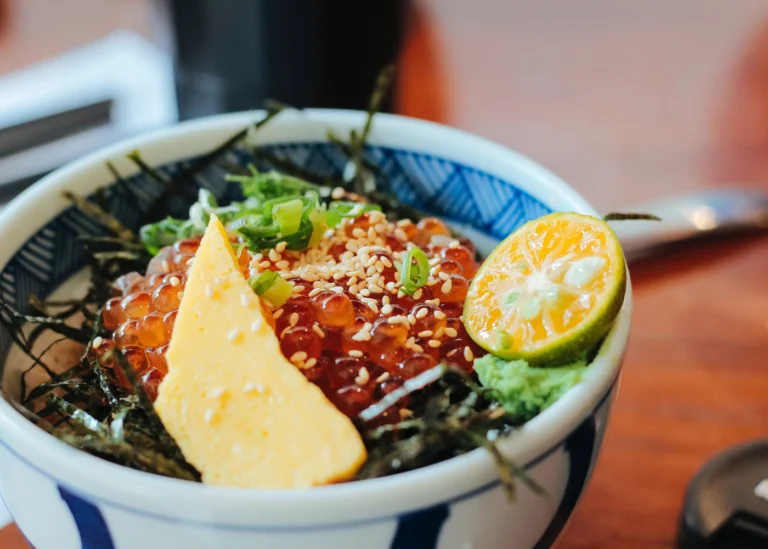
Beyond Sushi: A Guide to Japanese Comfort Food in Salisbury, from Ramen to Karaage
A plain guide to the hot Japanese dishes at Sushi Go-En in Salisbury: ramen, katsu curry, karaage, rice bowls, bento and small plates, plus ordering tips.
Read the guide →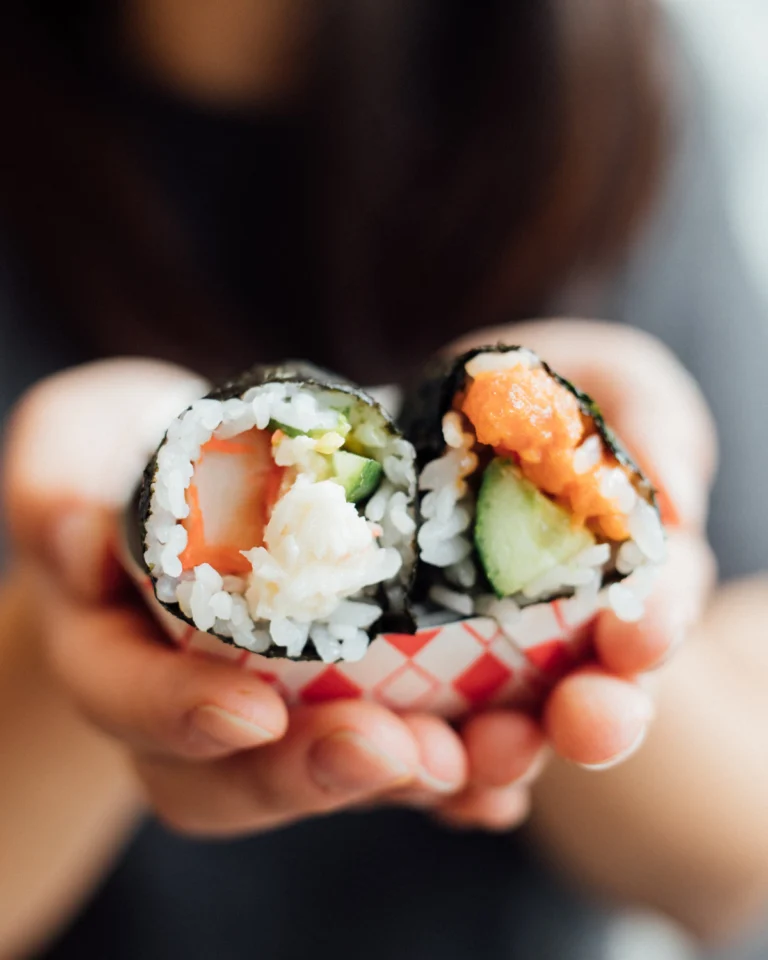
Types of Sushi Explained: Nigiri, Sashimi, Maki, Aburi and More
A plain guide to the types of sushi, from nigiri, sashimi and maki to gunkan, inari, chirashi and flame-seared aburi, with tips on where to start.
Read the guide →
Sushi Catering in Brisbane: How to Plan Sushi Boxes for Office Lunches, Parties and Events
How to plan sushi catering in Brisbane: choosing Sushi Go-En boxes, ordering ahead, invoices, pickup in Salisbury, keeping sushi cool and serving it well.
Read the guide →Find Sushi Go-En in Salisbury, Brisbane
Come to 660 Toohey Road, Salisbury QLD, open Monday to Saturday, 10:30 AM to 8:30 PM (kitchen closes 8 PM, closed Sunday). Walk-ins are always welcome at our sushi train, with fast seating.