
Sushi & Japanese Food Guides
Sushi Train in Salisbury: A First-Timer’s Guide to Conveyor Belt Sushi in Brisbane
A step-by-step first-timer's guide to our Salisbury sushi train: how conveyor belt sushi works, what order to eat in, hot dishes and takeaway.
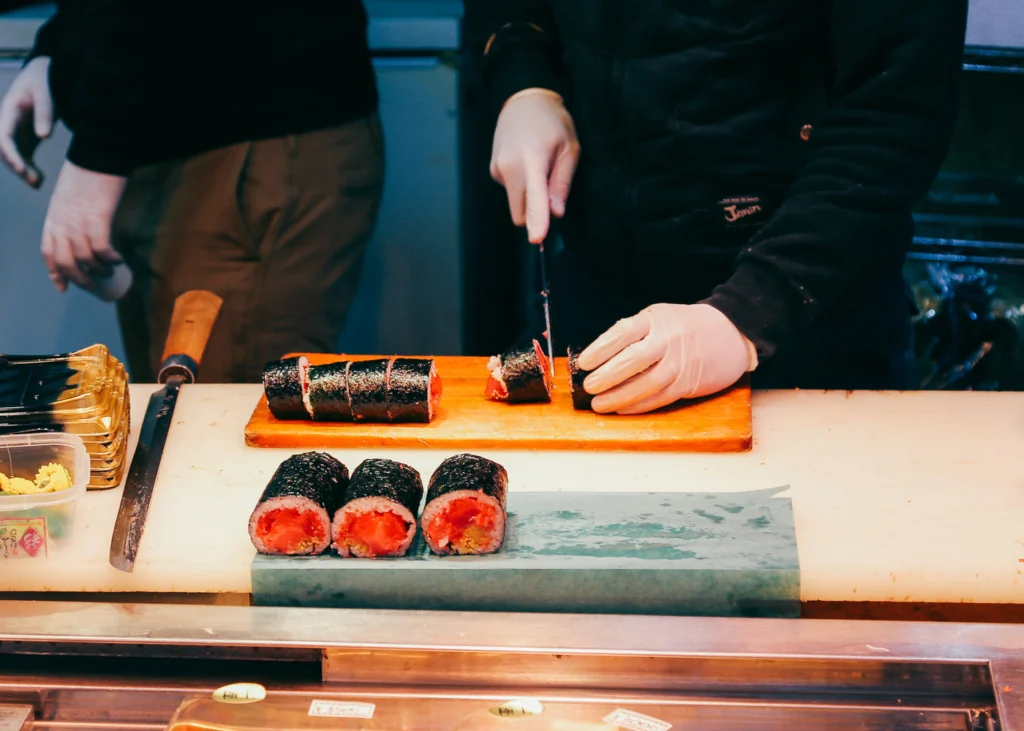
A sushi train is a restaurant where small plates of sushi glide past your seat on a moving belt and you take whatever appeals, one plate at a time. For a first sushi train Salisbury visit at Sushi Go-En, there is no booking and nothing to study beforehand: walk in, sit down, watch the belt and start choosing. This guide covers each step, from the front door to the final plate.
Quick answer: Our sushi train in Salisbury is walk-in only, so you simply arrive, take a seat and lift plates off the belt as they pass.
- Kaiten-zushi, the Japanese name, means revolving sushi. Australians call it a sushi train.
- Start with lighter fish, then move to richer, flame-torched aburi such as Aburi Wagyu.
- If you cannot see what you want, or you would like a hot kitchen dish, just ask our team.
- When you are finished, tell any staff member and they will sort out the bill with you.
- We trade six days a week and rest on Sundays. Hot food stops at 8:00 PM, half an hour before the doors close.
What is a sushi train, and what does kaiten-zushi mean?
A sushi train is a dining style where small plates of sushi ride a slow conveyor along the counter, and guests help themselves to anything that looks good. In Japan it is called kaiten-zushi, which translates as revolving sushi. Australians and New Zealanders say sushi train, while most other places use the phrase conveyor belt sushi.
The appeal is simple. You see each dish before you commit to it, so there is no guessing from a written description and no wait for a full order to arrive. You eat at your own pace, stop when you are satisfied, and try three small things instead of one big one.
It also takes the pressure off people who feel unsure about Japanese food. Nobody expects you to know the names of every piece. Pointing, watching and asking are all part of the experience, and our team is used to helping newcomers find their way around our sushi train in Salisbury.
If you would like to learn the difference between nigiri, maki, sashimi and aburi before you come in, our companion article on telling nigiri, maki and aburi apart before your first belt visit covers each style in detail.
Where did conveyor belt sushi come from?
Conveyor belt sushi started in Japan in 1958, when Yoshiaki Shiraishi opened a restaurant called Mawaru Genroku Sushi in Higashiosaka, beside Osaka. He was reportedly inspired by watching beer bottles travel along a production line at an Asahi brewery, and he spent several years building a belt that could carry plates past diners reliably.
Shiraishi’s motivation was practical. He ran a small shop and struggled to find enough staff to serve everyone, so a moving counter let one kitchen look after many seats at once. The format turned sushi from an occasional treat into something people could drop in for casually.
Interest really took off after a conveyor sushi outlet served visitors at the 1970 World Expo in Osaka. From there the idea spread across Japan and then overseas. You can read a fuller account on the Wikipedia page on conveyor belt sushi, which also notes the Australian habit of calling it a sushi train.
Today, sushi train Brisbane diners can find the format right across the city, and it remains one of the friendliest introductions to Japanese cuisine for people of every age. The machinery may be simple, but the idea behind it, good food passing within arm’s reach, has lasted for well over half a century.
Your first visit to our sushi train in Salisbury, step by step
Your first visit is easier than it looks. Come through the door, find a seat (or ask our team if you are unsure where to sit), watch the belt for a minute, then lift off any plate you fancy. If something you want is missing, ask us. Once you have had enough, flag down a team member to pay.
Step 1: Walk in, no booking required
We don’t take reservations. You can decide on the day and simply turn up, and seating is usually fast. Look for Shop 6/660 Toohey Road in Salisbury; our Google Maps listing for Sushi Go-En is the easiest way to plan your route.
Step 2: Take a seat and settle in
Once you are seated, give yourself a moment before reaching for anything. Put your bag down, get comfortable, and notice which direction the belt is moving. Plates will come towards you from one side, which tells you what is coming next and how long you have to decide.
Step 3: Watch the belt before you grab
New diners often take the first plate that passes out of nervousness. There is no rush. Let a full loop go by so you can see the range on offer, from simple fish to rolls and flame-torched pieces. Our sushi is freshly rolled daily, and what travels around changes as the kitchen sends out new plates.
Step 4: Lift whole plates off the belt
When something catches your eye, lift the entire plate off the belt and place it in front of you. Treat any plate you take as yours, rather than returning it to the belt, since food that has been handled at the table should not go back around. Stack your empty plates neatly beside you as you go.
Step 5: Ask for anything you cannot see
The belt is only part of what we offer. If you are hoping for our fresh, thinly sliced sashimi or a particular aburi piece and it has not come past, ask a team member. The same goes for hot dishes from the kitchen, which we cover further down. Asking is part of how every sushi train works, and we would rather you get exactly what you are craving.
Step 6: Tell us when you are ready to pay
When you have finished, let one of our staff know and they will guide you through settling up. Many sushi trains colour-code their plates by price, but systems differ from place to place, so if you are curious about how it works at Go-En, just ask when you sit down.
For soy sauce, wasabi, pickled ginger and chopstick manners, see our separate article on handling soy, wasabi and ginger once a plate reaches your seat.
What order should you eat sushi train plates in?
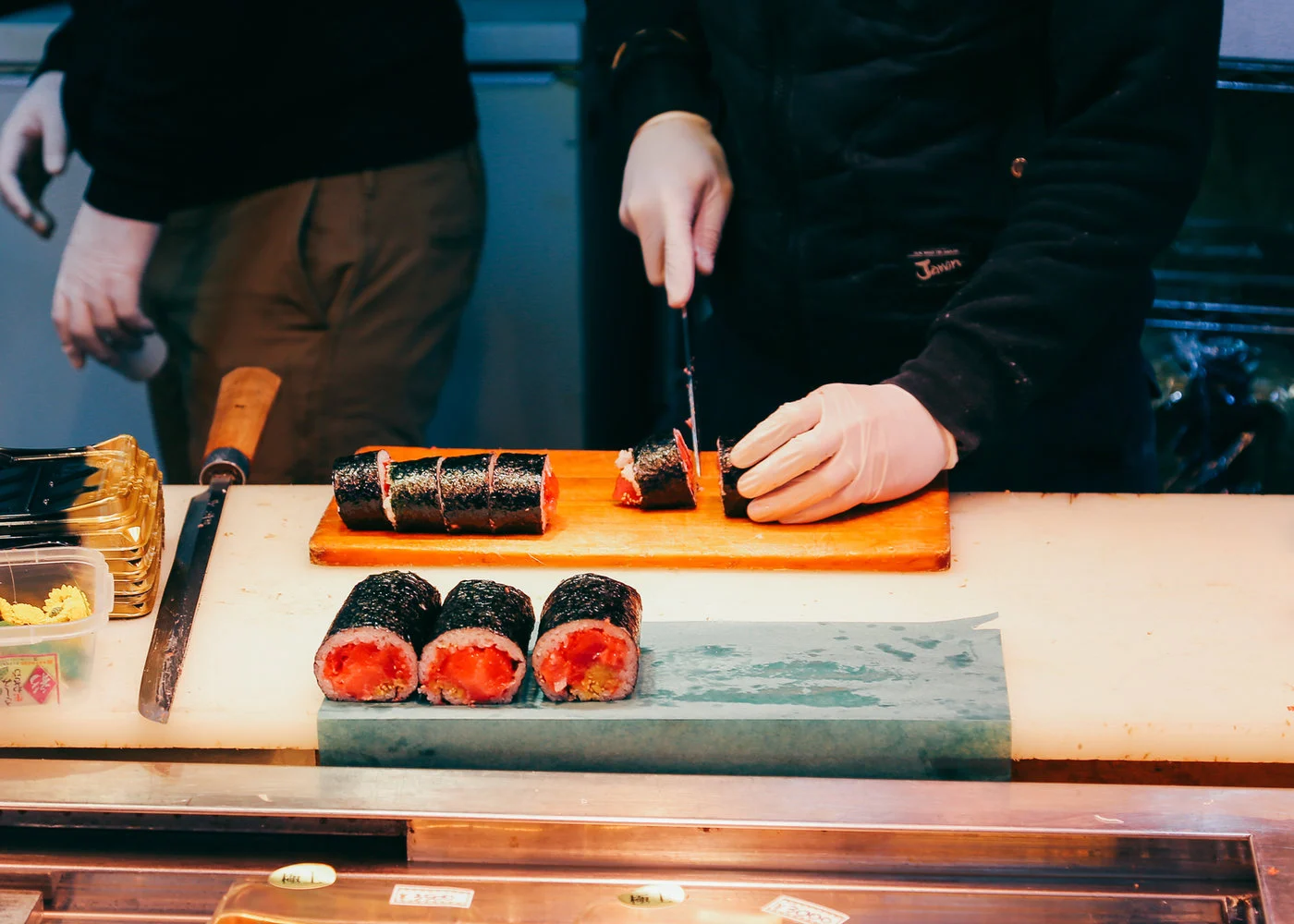
Begin light and finish rich. Delicate flavours such as plain sashimi or simple fish shine brightest early, before stronger tastes crowd your tongue, so choose those first. Move on to rolls and sauced items in the middle, then save smoky, flame-torched aburi like our Aburi Wagyu for later, when bolder flavour will not overpower anything that follows.
This is the same logic a chef uses when planning a tasting sequence. A rich, fatty mouthful leaves a lingering taste, and if you eat it first, a subtle slice of fish afterwards can seem flat. Building gradually lets each plate show its best side.
Use the table below as a loose plan rather than a rulebook. Your own preferences matter more than any sequence.
| Stage | What to look for | Ideas at Sushi Go-En |
|---|---|---|
| Opening plates | Clean, light, simply prepared fish | Sashimi, plain fish sushi from the belt |
| Middle of the meal | Rolls and pieces with sauces or toppings | Freshly rolled sushi as it passes |
| A warm break | Something hot and crisp to reset | Light, crisp tempura or agedashi tofu |
| Richer finish | Flame-torched, smoky, full-flavoured pieces | Aburi Wagyu and other aburi plates |
Aburi means flame-seared. The torch lightly chars the surface, releasing a smoky aroma while the inside stays soft. On our Aburi Wagyu, that treatment gives the beef a melt-in-the-mouth finish, which is exactly why it works best near the end. If you are curious about the breed itself, the Wikipedia article on wagyu explains where the name comes from.
A couple of pacing tips help too. Take one plate at a time instead of three at once, so nothing sits and warms while you work through the others. Have a sip of water between very different flavours. And if a plate you loved comes round again, there is no rule against a second helping.
Can you order hot kitchen dishes at a sushi train?
Yes. Alongside the belt at our Salisbury sushi train, the kitchen prepares hot Japanese dishes, so ask our team how to order them while you are seated. Pairing a warm bowl with a few cold plates gives you a fuller, more varied meal, and it suits anyone at the table who would rather skip raw fish altogether.
Because cooked dishes take a little time to prepare, it helps to order early. Sort out your hot dish soon after you sit down, then pick sushi off the belt while it is being made. That way it arrives while you are still eating, not after you have filled up.
Some of the hot dishes you can ask for include:
- Chashu Ramen, noodle soup topped with braised chashu pork
- Chicken Katsu Curry, a crumbed fried chicken cutlet with Japanese curry
- Karaage Rice Bowl (A$17.50), Japanese fried chicken over rice
- Teriyaki Rice Bowl (A$17.50) and Curry Rice Bowl (A$17.50)
- Okonomiyaki, a savoury pancake served hot
- Spicy Onion Takoyaki, octopus balls with a spicy onion flavour
Where no price is shown above, check the order page for the current price. Our full Sushi Go-En menu lists every dish, and if you want to know what goes into each bowl first, see what is inside the ramen, katsu curry and karaage you can add to a belt meal.
A good rule for sharing tables: one hot dish between two people, plus sushi from the belt, usually gives everyone a taste of both worlds without over-ordering. You can always ask for another bowl if appetites turn out bigger than expected.
Is a sushi train good for solo diners, couples, families and groups?
A sushi train suits nearly every kind of party. Solo diners get a relaxed counter seat with no set courses to wait through, couples can share and swap plates, children enjoy spotting dishes as they roll by, and groups can each eat at their own speed. Only the planning changes, depending on who is coming along.
Eating on your own
Counter dining was practically designed for one. You can sit down for a quick lunch, read or just watch the belt, and leave as soon as you are done. Nobody waits on a table for two, and there is no awkwardness about ordering a single main. Many regulars at sushi trains everywhere are solo diners on a lunch break.
Coming as a couple
For two people, the fun is in trading. Each of you takes different plates and you swap halves, which doubles the variety without doubling the bill. It also makes a relaxed, low-fuss date: conversation flows easily when there is always something new passing to talk about.
Bringing the kids
Children tend to love the moving belt. To keep things calm, let an adult lift plates off for younger kids, and agree on a plate or two at a time so little eyes do not get bigger than little stomachs. If your children prefer cooked food, a Karaage Rice Bowl or Teriyaki Rice Bowl from the kitchen can sit alongside a few belt plates. If you need anything particular for little ones, ask our team when you arrive.
Arriving with a group
Because we do not take bookings, larger groups simply walk in like everyone else. Seating together depends on what is free when you arrive, so coming outside the busiest mealtimes gives you the best chance of sitting side by side. If you are unsure where your group should sit, ask our team. For a big gathering at home or work instead, read what to order when your group is too big for the counter to see how pre-ordering works.
When is the best time to visit the sushi train in Salisbury?
Our counter runs six days a week and rests on Sundays, as the table below shows. Mid-afternoon tends to be calmest for a relaxed first visit, and if you would like a hot dish with your sushi, arrive with plenty of time so your hot food order beats the 8:00 PM kitchen close.
| Day | Sushi train open | Kitchen |
|---|---|---|
| Monday to Saturday | 10:30 AM to 8:30 PM | Closes 8:00 PM |
| Sunday | Closed | Closed |
As at most restaurants, the usual lunch and dinner times are generally the busiest. If you would prefer a quieter first visit, so you can take your time and ask plenty of questions, a mid-afternoon stop is generally a calmer choice. Our 10:30 AM opening also makes an early lunch easy.
We are on Toohey Road in Salisbury, on Brisbane’s southside, and nearby suburbs include Moorooka, Coopers Plains, Nathan, Tarragindi, Rocklea, Acacia Ridge, Annerley, Holland Park and Mount Gravatt. If you are finishing work late, check the clock against our 8:30 PM close and give yourself enough time to enjoy the meal without hurrying.
Before you visit: the essentials
- Head for the right door. Our counter is at Shop 6, 660 Toohey Road, Salisbury QLD 4107, on Brisbane’s southside.
- Check the day. The trading table above has our times; Sunday is the one day the belt stands still.
- Skip the booking. Seats go to whoever walks in, and seating is usually fast.
- Bring only an appetite. No sushi vocabulary is needed, because pointing and asking work perfectly well.
- Got a question first? Send an email to dk@sushigoen.com.au, message @sushigoen1 on Instagram, or ring 0452 338 318.
- Remember the name. Go-en (ご縁) points to a bond that fate arranges, and we hope strangers sitting side by side at the belt feel a little of it.
Can you take sushi train food home afterwards?
Yes. If you are full but still tempted by something you did not get to, or you want tomorrow’s lunch sorted, place a pickup or delivery order through our online order page, or phone us on 0452 338 318. Prices and the day’s availability are kept up to date on the order page itself.
This is a handy habit for first-timers in particular. It is common to spot a hot dish at the next seat halfway through your meal and realise you have no room left. Rather than leaving disappointed, put it on a takeaway order and enjoy it later at home.
A few dishes that travel well for later:
- Teriyaki Chicken Bento Meal (A$25.00), a tidy packed meal for the next day
- Karaage Salad (A$18.50), crisp fried chicken with salad
- Fresh Salmon Rice Bowl, with the current price listed on the order page
- Chicken Rice Bowl Family Set (A$80.00), a family-sized set for sharing with the household
If you are planning ahead for a larger occasion, our Mini Joy, Harmony and Gratitude sushi boxes need at least 24 hours notice through the Sushi Box pre-order page.
One important note for anyone with an allergy or intolerance: we have not put allergen breakdowns online, so phone our team (0452 338 318) before you order or sit down and we can answer properly. For general guidance on living with food allergies, ASCIA, the Australasian allergy body, is a reliable place to start.
Visit or order: come and sit at the belt
Reading about a sushi train only gets you so far, and sitting at one teaches you the rest. Drop by on any of our six trading days, take a seat at our sushi train in Salisbury and let the belt do the introductions. Bring a friend, the kids or just yourself.
Can’t make it in? Order pickup or delivery online and we will have your food ready. Planning for a crowd? Head to the pre-order page at least a day ahead. Either way, you can learn more about us on the Sushi Go-En home page, and we look forward to seeing you on Toohey Road.
Frequently asked questions
I have never been to a sushi train before. Will I feel out of place?
Not at all. Lots of diners are first-timers at a sushi train, and no special knowledge is required. You can watch other diners for a minute, take plates whenever you feel ready and ask our team about anything that looks unfamiliar. Nobody minds questions, and getting a few small things wrong is part of learning how it all works.
Is it normal to eat at a sushi train on my own?
Yes, solo dining is completely normal at a sushi train and is one of the format’s biggest strengths. Counter seating means you never feel like you are taking up a table meant for a group, and you can eat as much or as little as you like. Many people pop in alone for a quick lunch, then leave as soon as they have had enough.
Can I bring young children to the sushi train?
Yes, families are welcome, and children usually find the moving belt fun to watch. It works best when an adult takes plates off for younger kids and helps them pick one or two at a time. If your children prefer cooked food, ask our staff about hot kitchen dishes to go with the sushi. For anything specific your little ones need, have a word with our team when you arrive.
Can a large group sit together at the sushi train?
We seat everyone on a walk-in basis, so whether a big group can sit side by side depends on what is free at the time you arrive. Coming outside the busiest lunch and dinner periods improves your chances. If you are not sure where a larger party should settle, ask our team and we will help where we can.
How long does a meal at a sushi train usually take?
A sushi train meal takes as long as you want it to, because you are never waiting for courses. In general, a solo diner grabbing a few plates can be finished in well under half an hour, while friends sharing plates and a hot dish often linger longer. If you plan to order from our kitchen, arrive before it closes at 8:00 PM.
What should I do if the dish I want is not on the belt?
Simply ask a member of our team. What travels on the belt changes through the day, so a favourite may not pass by at the moment you are hoping for it. Let us know what you are after, whether it is a particular sushi, sashimi or a hot dish from the kitchen, and we will check what the kitchen can manage and look after you from there.
How can I tell what is on a plate before I take it?
The easiest way is to ask. Our staff are happy to tell you what a plate is as it comes around, so you never need to guess. You can also let a full loop of the belt pass before choosing, which gives you time to look closely at each item. If you are still unsure, leave it on the belt and wait for something you recognise.
I have a dietary requirement. Can I still eat at the sushi train?
The safest first step is a phone conversation with our team on 0452 338 318 ahead of your visit, or a chat at the counter when you arrive. Dish-by-dish dietary information is not published online, so talking it through directly matters. We would rather answer your questions properly than have you guess from what you see on the belt.
Can I put a plate back on the belt after taking it?
As a general sushi train courtesy, once you lift a plate off the belt it stays with you. Food that has been handled at a table should not travel past other diners again. If you are unsure about a plate, take a good look while it is still moving and only lift it off once you have decided you would like to eat it.
How do I let the staff know I have finished eating?
Catch the eye of any staff member, or just tell someone nearby that you are done, and we will take care of the bill with you. Keeping your empty plates stacked neatly beside you makes this quicker. If you would like to know how our plates and payment work before you start eating, feel free to ask when you first sit down.
More from the blog
Beyond Sushi: A Guide to Japanese Comfort Food in Salisbury, from Ramen to Karaage
A plain guide to the hot Japanese dishes at Sushi Go-En in Salisbury: ramen, katsu curry, karaage, rice bowls, bento and small plates, plus ordering tips.
Read the guide →
How to Eat Sushi: A Friendly Guide to Soy Sauce, Wasabi, Ginger and Chopstick Etiquette
A relaxed guide to how to eat sushi: hands or chopsticks, dipping in soy, wasabi, ginger, eating order and the chopstick habits to avoid.
Read the guide →
Types of Sushi Explained: Nigiri, Sashimi, Maki, Aburi and More
A plain guide to the types of sushi, from nigiri, sashimi and maki to gunkan, inari, chirashi and flame-seared aburi, with tips on where to start.
Read the guide →Find Sushi Go-En in Salisbury, Brisbane
Come to 660 Toohey Road, Salisbury QLD, open Monday to Saturday, 10:30 AM to 8:30 PM (kitchen closes 8 PM, closed Sunday). Walk-ins are always welcome at our sushi train, with fast seating.