
Sushi & Japanese Food Guides
Types of Sushi Explained: Nigiri, Sashimi, Maki, Aburi and More
A plain guide to the types of sushi, from nigiri, sashimi and maki to gunkan, inari, chirashi and flame-seared aburi, with tips on where to start.
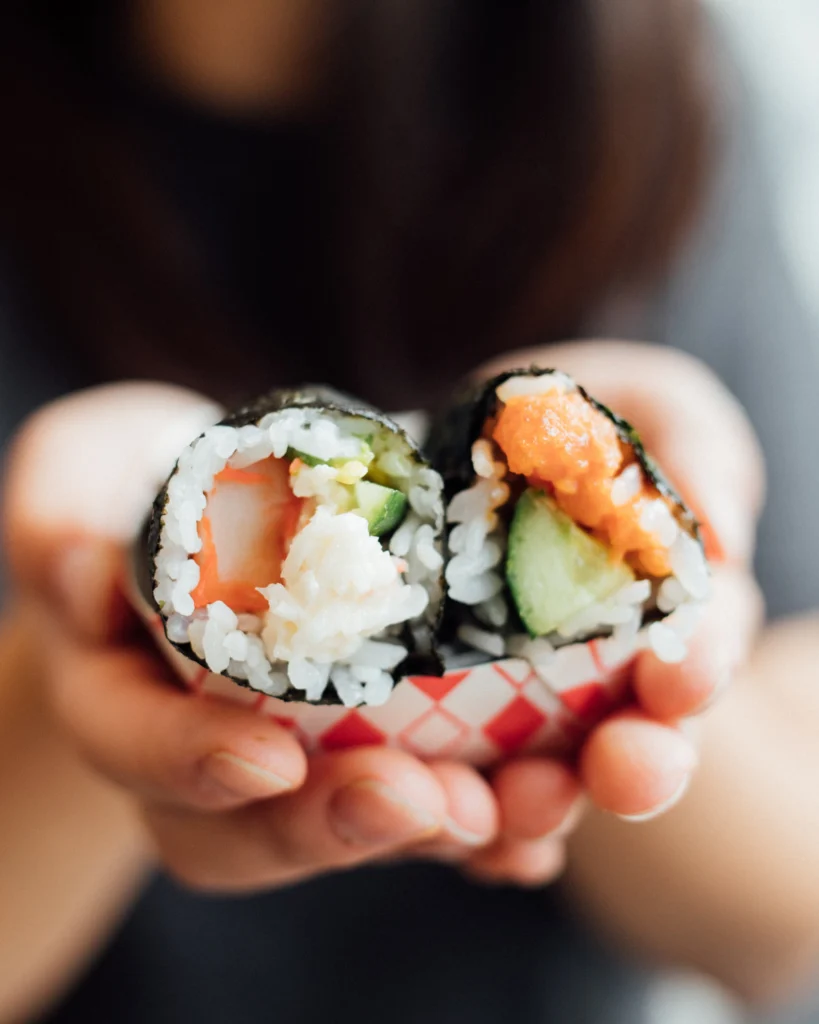
Most types of sushi come down to a handful of shapes: rice pressed by hand with a topping (nigiri), rice rolled in seaweed (maki and its relatives), rice held in a nori wall or a tofu pouch (gunkan and inari), and rice in a bowl (chirashi). Sashimi, the sliced fish people often group with them, is really a separate dish because it leaves the rice out. Below, we explain each style, show how aburi flame-torching changes a piece, and suggest where to begin when you sit down at our sushi train in Salisbury.
Quick answer: sushi is defined by seasoned vinegared rice, not by raw fish, and every style is a different way of shaping that rice.
- Nigiri is a small hand-formed mound of rice with a slice of topping laid over it.
- Sashimi is fish sliced and served on its own, so strictly speaking it is not sushi at all.
- Maki means rolled: hosomaki is thin, futomaki is thick, uramaki puts the rice outside and temaki is a cone you hold.
- Aburi means flame-seared, which warms the topping, softens fat and adds a smoky edge.
- At Sushi Go-En you can try our Aburi Wagyu, Sashimi and Fresh Salmon Rice Bowl, plus whatever is circling on the train that day.
What makes something sushi?
Sushi is any dish built on sushi rice, which is short-grain Japanese rice dressed while warm with rice vinegar, sugar and salt. The topping or filling can be raw fish, cooked seafood, egg or vegetables. So the rice, not the fish, is what earns the name, and that is why some sushi contains no seafood at all.
In Japanese the seasoned rice is called shari or sumeshi, and everything placed on or inside it is called neta. Good sushi rice is glossy, slightly sticky and holds together under gentle pressure, yet each grain stays distinct. The vinegar gives a soft tang that cuts through rich toppings such as salmon belly or seared beef.
Temperature matters more than many people expect. Rice served close to body temperature tastes rounder and sweeter than rice straight from the fridge, which is one reason sushi made fresh each day feels so different from a supermarket pack. When we say our sushi is freshly rolled daily, this is the part of the craft we are talking about.
Once you know that rice is the anchor, the rest of the sushi family makes sense. Every style below is simply a different answer to one question: how do you shape that rice and bring it together with its topping?
What is nigiri sushi?
Nigiri is a small, oval mound of sushi rice pressed together by hand, with a slice of fish or another topping draped across the top. The name comes from the Japanese verb for gripping or squeezing. A dab of wasabi often sits between rice and topping, and a well-made piece is usually eaten in one bite.
Making nigiri looks simple, but the pressing is a fine balance. Squeeze too hard and the rice turns dense and gluey. Squeeze too lightly and the piece falls apart before it reaches your mouth. The goal is a mound firm enough to pick up yet loose enough to loosen on the tongue.
Common toppings include salmon, tuna, prawn, eel and a sweet rolled omelette known as tamago. Some toppings are fully raw, some are cooked and some are seared. A strip of nori is sometimes wrapped around the middle to hold softer toppings in place.
Nigiri is the purest way to taste the topping alongside the rice, because there is nothing else on the plate to hide behind. For that reason, plenty of sushi lovers judge a sushi kitchen by its nigiri first.
Nigiri vs sashimi: what is the difference?
The difference between nigiri and sashimi is the rice. Nigiri always sits on a pressed mound of vinegared rice, while sashimi is fish or seafood sliced and served by itself, often with shredded daikon, a shiso leaf, wasabi and soy sauce. Because sushi is defined by its rice, sashimi is technically not sushi at all.
People mix the two up because they share a menu section and often the same fish. The way the fish is cut also differs. Slices for sashimi tend to be a little thicker, so each piece carries its own texture, while nigiri slices are trimmed to drape neatly over rice.
Sashimi suits anyone who wants the cleanest possible taste of the seafood, or who would rather keep the meal light on rice. Nigiri suits anyone who likes the contrast of cool fish against gently seasoned, slightly tangy grains.
Our own Sashimi is fresh and thinly sliced, so it is an easy way to compare the two styles in a single visit. Order a plate alongside a few rice-based pieces from the train and taste them side by side.
What are the different types of sushi rolls?
Rolled sushi is called maki, short for makizushi, and it covers several types of sushi made by wrapping rice and fillings in nori. Hosomaki is a slim roll with one filling, futomaki is a fat roll with several, uramaki is an inside-out roll with rice on the outside, and temaki is a hand-held cone.
Most makizushi is shaped on a bamboo mat called a makisu. The chef spreads rice over a sheet of nori, lays the fillings in a line, then rolls the mat forward to form a firm cylinder before slicing it into rounds.
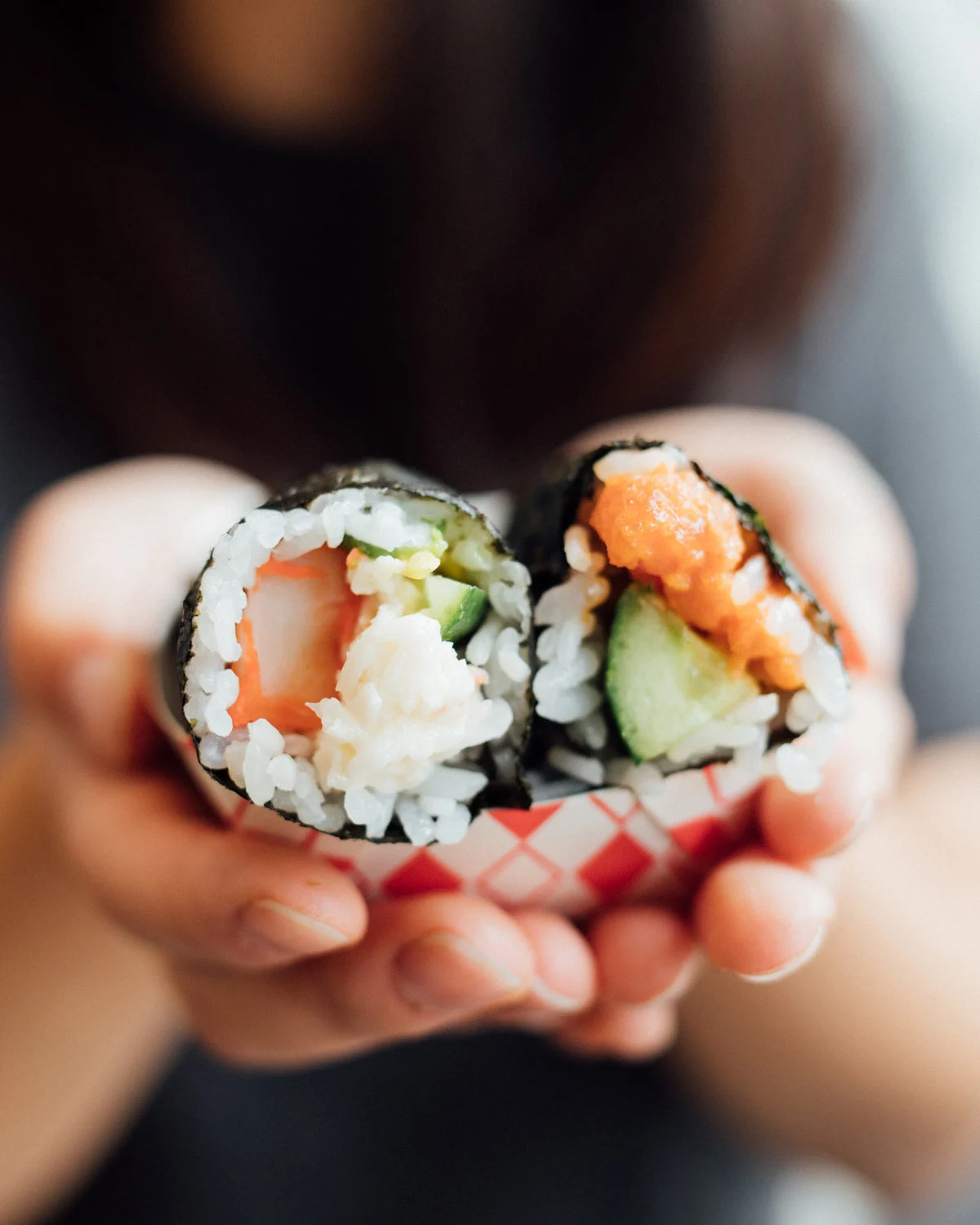
Hosomaki: the thin roll
Hosomaki has the nori on the outside and usually a single filling, such as cucumber or a strip of fish. The rolls are narrow, so each slice is a neat, small bite. Their simplicity makes them a gentle starting point for children and cautious eaters.
Futomaki: the thick roll
Futomaki is the generous version, with the nori outside and several fillings packed together, often a mix of vegetables, egg and seafood. Slices are wide and colourful, and they can take two bites. It is the roll to choose when you want a bit of everything in each piece.
Uramaki: the inside-out roll
Uramaki flips the usual order, so the nori wraps the filling and the rice forms the outer layer. The outside is often coated in sesame seeds or fish roe. Many diners outside Japan grew up on this style because the soft rice exterior feels less unfamiliar than a sheet of seaweed.
Temaki: the hand roll
Temaki is rolled into a cone by hand rather than on a mat, with fillings spilling out of the open end. It is meant to be eaten with your fingers straight away, while the nori is still crisp. Waiting too long lets moisture from the rice soften the seaweed.
What are gunkan, inari and chirashi?
Gunkan, inari and chirashi are three sushi styles that are neither pressed slices nor rolls. Gunkan uses a band of nori to hold loose toppings on a rice base, inari tucks sushi rice inside a sweet fried tofu pouch, and chirashi scatters toppings over a bowl of rice. Each solves a different shaping problem.
Gunkan: the battleship
Gunkan-maki translates as battleship roll, a nod to its tall, boat-like profile. A strip of nori is wrapped around an oval of rice so it stands higher than the grains, creating a little wall. That wall is what lets a chef serve toppings that would otherwise slide off, such as fish roe, sea urchin or finely chopped fish mixed with mayonnaise.
Inari: the tofu pocket
Inarizushi is made by filling a pouch of deep-fried tofu, simmered in a sweet, savoury liquid, with sushi rice. There is often no fish inside at all. The result is soft, juicy and a little sweet, which makes inari popular with people who are not keen on seafood.
Chirashi: scattered sushi
Chirashi, or chirashizushi, means scattered sushi. Instead of shaping individual pieces, the cook spreads sushi rice in a bowl or box and arranges sliced fish, egg and vegetables over it. It is a relaxed, home-style way to enjoy the same flavours, and it is common at family celebrations in Japan.
What is aburi sushi and why does flame change the flavour?
Aburi sushi is sushi whose topping has been briefly seared with a blowtorch or open flame, usually on top of nigiri. The surface browns and caramelises while the inside stays tender. Fat starts to melt, the topping warms slightly, and a light smoky aroma appears, so one piece offers both cool rice and a warm, toasty top.
Flame does several things at once. Heat triggers browning reactions on the surface, which create the deeper, roasted notes you also find on a seared steak. It also softens fat within the topping, so rich cuts become silkier and almost buttery. Toppings with plenty of natural fat, such as salmon belly or marbled beef, respond best.
Texture changes too. A raw slice is smooth and cool all the way through, while an aburi piece has a thin, slightly crisp edge that gives way to a soft centre. Some kitchens brush a sauce over the topping before torching it, so the glaze bubbles and catches, adding sweetness and gloss.
Aburi is also a friendly bridge for people who are unsure about raw fish. Seared pieces taste familiar, closer to grilled food, without losing the delicate character that makes sushi appealing.
Our Aburi Wagyu
Flame-torching is one of the touches we bring to our sushi, and our Aburi Wagyu shows why. It is wagyu beef sushi seared with a flame, giving a smoky surface and a melt-in-the-mouth finish. Wagyu is famous for fine marbling, and a quick sear turns that fat soft and rich without cooking the beef through.
Types of sushi compared at a glance
The quickest way to tell the main types of sushi apart is to look at two things: where the rice sits and what holds the piece together. The table below puts every style from this guide side by side, with a short note on the kind of eater or occasion each one tends to suit best.
| Type | What it is | How it is shaped | Good for |
|---|---|---|---|
| Nigiri | Topping laid over a small mound of sushi rice | Pressed by hand into an oval | Tasting the topping and rice together in one bite |
| Sashimi | Sliced fish or seafood with no rice | Cut with a knife and arranged on a plate | The cleanest taste of the seafood itself |
| Hosomaki | Thin roll with a single filling | Rolled on a bamboo mat, nori outside | Small, tidy bites and cautious eaters |
| Futomaki | Thick roll with several fillings | Packed generously and rolled on a makisu, seaweed outside | A mix of flavours in every slice |
| Uramaki | Inside-out roll | Rice outside, nori wrapped around the filling | People who prefer less visible seaweed |
| Temaki | Cone-shaped hand roll | Rolled by hand, eaten straight away | Crisp nori and a casual, hands-on bite |
| Gunkan | Rice inside a raised wall of nori | Nori band wrapped around an oval of rice | Loose toppings such as roe |
| Inari | Sushi rice in a sweet fried tofu pouch | Rice stuffed into the opened pouch | A soft, sweet bite, often with no fish |
| Chirashi | Toppings scattered over a bowl of rice | Arranged loosely in a bowl or box | A relaxed, sit-down meal |
| Aburi | Any sushi with a flame-seared topping | Torched just before serving | Smoky, rich flavour and a warm top |
Which types of sushi suit beginners and adventurous eaters?
Beginners usually do best with types of sushi that have cooked or seared toppings and familiar textures, such as simple rolls, inari and aburi pieces. Adventurous eaters can move towards plain nigiri, sashimi and gunkan with roe or richer seafood, where the natural flavour and texture of the topping are front and centre.
If you are new to sushi
- Start with a thin roll or an inside-out roll, since the filling is wrapped up and the flavours are gentle.
- Try something seared, like our Aburi Wagyu, which tastes closer to grilled beef than to raw fish.
- Pick salmon first if you want fish, because its mild, buttery flavour wins over many first-timers.
- Keep a rice dish nearby, such as a bowl, so the meal feels filling even if you only sample a few pieces.
If you like to explore
- Order sashimi and nigiri of the same fish, then compare how the rice changes the experience.
- Look out for gunkan with roe, which pops gently and tastes of the sea.
- Compare a raw piece with a seared one to notice how flame shifts texture and aroma.
- Ask our team about any plate you do not recognise before you take it from the belt.
Whatever your comfort level, there is no wrong order. Taking one plate at a time is the best way to learn your own favourites. For tips on soy sauce, wasabi and pickled ginger, see our tips on which soy, wasabi and ginger habits suit each sushi style.
Where can you try these sushi styles at Sushi Go-En?
At Sushi Go-En in Salisbury, the best way to explore different styles is a mix of our signature plates and the sushi train itself. Our Aburi Wagyu covers flame-seared sushi, our Sashimi shows fish without rice, and our Fresh Salmon Rice Bowl gives a bowl-style meal. The train adds whatever we have made fresh that day.
What is on the train varies, so the easiest approach is to watch what passes, take anything that catches your eye and use this guide to work out what it is. If you are unsure, our staff are happy to explain a plate before you pick it up. New to the conveyor? Our explainer on picking plates off the conveyor without any guesswork walks through how it works.
We do not list chirashi as a menu item, but if the idea of a bowl appeals, our Fresh Salmon Rice Bowl puts fresh salmon over rice for a simple, sit-down meal. Guests who prefer something hot can pair sushi with light, crisp tempura, and our rundown of the warm dishes to order when raw fish is not on your list covers ramen, katsu curry and more.
Feeding a group? Our Sushi Box and Catering Collection comes in three sizes: the Mini Joy Sushi Box, the Harmony Sushi Box and the Gratitude Sushi Box. What goes inside changes, so call us or message us on Instagram to ask about your date, and see our notes on planning a mixed box order for a team lunch or party if you are choosing for a group.
Where to taste these styles in Salisbury
- Find us: Our address is Shop 6/660 Toohey Road, Salisbury QLD 4107, a short hop for diners from Annerley, Tarragindi, Rocklea and other neighbouring suburbs.
- Pick your day: we trade from 10:30 AM to 8:30 PM, Monday to Saturday, and the last kitchen orders go in by 8:00 PM, so plan around Sunday, which is our day off.
- Choose your format: take a seat by the conveyor as a walk-in, have the Aburi Wagyu or Sashimi sent home through our online ordering, or lock in a Sushi Box with a full day of notice.
- Got a question about a style? The team answers on 0452 338 318, by email at dk@sushigoen.com.au and through Instagram messages to @sushigoen1.
Anyone with an allergy or dietary need should call 0452 338 318 ahead of ordering, because allergen details are not published on our website. General allergy information is available from ASCIA.
A mini sushi glossary
A few Japanese words come up again and again once you start eating sushi regularly. Knowing them makes menus, train plates and conversations with staff much easier to follow. Here is a short glossary of the terms used in this guide, each explained in plain English so you can recognise them at a glance.
- Shari: seasoned sushi rice, the base of every sushi style.
- Neta: the topping or filling, whether fish, seafood, egg or vegetable.
- Nori: thin sheets of dried, pressed seaweed used for wrapping.
- Makisu: the bamboo mat used to shape rolled sushi.
- Maki: any rolled sushi; hosomaki is thin and futomaki is thick.
- Uramaki: an inside-out roll with the rice on the outside.
- Temaki: a cone-shaped roll made by hand.
- Gunkan: rice inside a raised band of nori, holding loose toppings.
- Inari: a deep-fried tofu pocket filled with seasoned rice.
- Chirashi: toppings scattered across a bowl of sushi rice.
- Aburi: seared with a flame to brown and warm the topping.
- Gari: thin slices of pickled ginger, eaten between pieces to reset the palate.
Come in and try a few styles, or order ahead
Reading about nigiri only gets you so far, so put this guide to the test with a plate or two. Drop in from Monday to Saturday and sit by the belt; we never take bookings, so you can simply turn up. If home suits better, place a pickup or delivery order, which also shows today’s prices, or scan the full Sushi Go-En menu first. Hosting a crowd? Reserve a Sushi Box online, giving us 24 hours or more of notice. Get directions to Toohey Road or head back to our home page to see what else we make.
Frequently asked questions
Is sashimi a type of sushi?
No, not in the strict sense. Sushi is defined by vinegared rice, and sashimi is sliced raw fish or seafood served without any rice. The two share ingredients and often sit together on Japanese menus, which is why they get confused. If you want fish on rice, order nigiri instead. If you want the seafood on its own, sashimi is the right choice.
What is the difference between nigiri and maki?
Nigiri is a single hand-pressed mound of rice with a topping placed over it, while maki is rice and fillings rolled up in seaweed and cut into rounds. Nigiri puts the topping on show and is usually one bite. Maki wraps the filling inside, so a roll can combine several ingredients, and it is normally shaped with a bamboo mat.
What is uramaki?
Uramaki is an inside-out sushi roll. Instead of seaweed on the outside, the seaweed hugs the filling and the rice becomes the outside, often finished with sesame seeds or roe. The style became popular outside Japan because many diners found the rice exterior more approachable than a visible sheet of seaweed, and the outer coating adds extra texture.
What does aburi mean?
Aburi is a Japanese term for searing food over flame. In sushi, it describes a topping that is briefly torched just before serving, so the surface browns while the centre stays soft. The heat releases a smoky aroma and melts some of the fat, giving the piece a richer taste and a warm top that contrasts with the cooler rice underneath.
What is gunkan sushi?
Gunkan is an oval of sushi rice circled by a tall band of seaweed that stands above the grains, forming a small cup. The name means battleship, after its shape. That raised edge holds soft or loose toppings in place, which is why gunkan is the usual choice for fish roe, sea urchin and chopped seafood mixes.
Which type of sushi is best for first-timers?
Simple rolls and seared pieces are usually the easiest place to start. Thin rolls keep the filling wrapped up and the flavours mild, while seared sushi tastes closer to grilled food. At Sushi Go-En, the Aburi Wagyu or the Fresh Salmon Rice Bowl makes a comfortable first order, and you can branch out to other plates from there.
Is all sushi made with raw fish?
No. Sushi only needs vinegared rice, so the topping or filling can be cooked, seared or meat-free. Cooked prawn, eel, sweet omelette and cucumber are all traditional choices, and inari often contains no seafood whatsoever. Seared styles such as aburi also sit somewhere between raw and cooked, which makes them a comfortable option for anyone unsure about raw fish.
What is chirashi?
Chirashi means scattered sushi. Rather than shaping individual pieces, the cook spreads seasoned rice in a bowl or lacquered box and arranges sliced fish, egg, vegetables and garnishes across the top. It is eaten with chopsticks like a rice bowl, and in Japan it is a favourite dish for festivals and family occasions because it is easy to prepare in larger amounts.
What is inari sushi?
Inari sushi is seasoned rice tucked inside a pouch of deep-fried tofu that has been simmered in a sweet, savoury broth. The pouch soaks up that liquid, so each bite is soft, moist and slightly sweet. Inari usually contains no fish, which makes it a good pick for people who enjoy the taste of sushi rice but are not drawn to seafood.
What is temaki?
Temaki is a hand roll shaped into a cone rather than a cylinder. A sheet of nori is wrapped around rice and fillings by hand, leaving the wide end open so the ingredients show. It is meant to be picked up and eaten with your fingers right away, before moisture from the rice softens the seaweed and it loses its crunch.
More from the blog
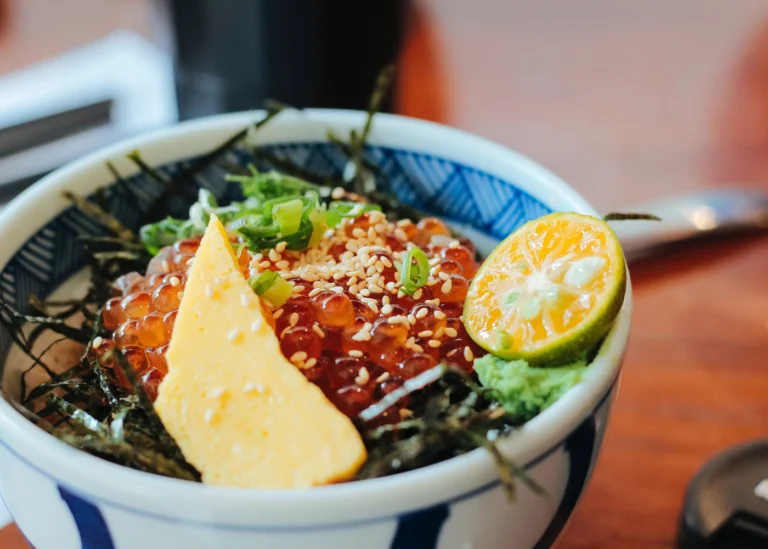
Beyond Sushi: A Guide to Japanese Comfort Food in Salisbury, from Ramen to Karaage
A plain guide to the hot Japanese dishes at Sushi Go-En in Salisbury: ramen, katsu curry, karaage, rice bowls, bento and small plates, plus ordering tips.
Read the guide →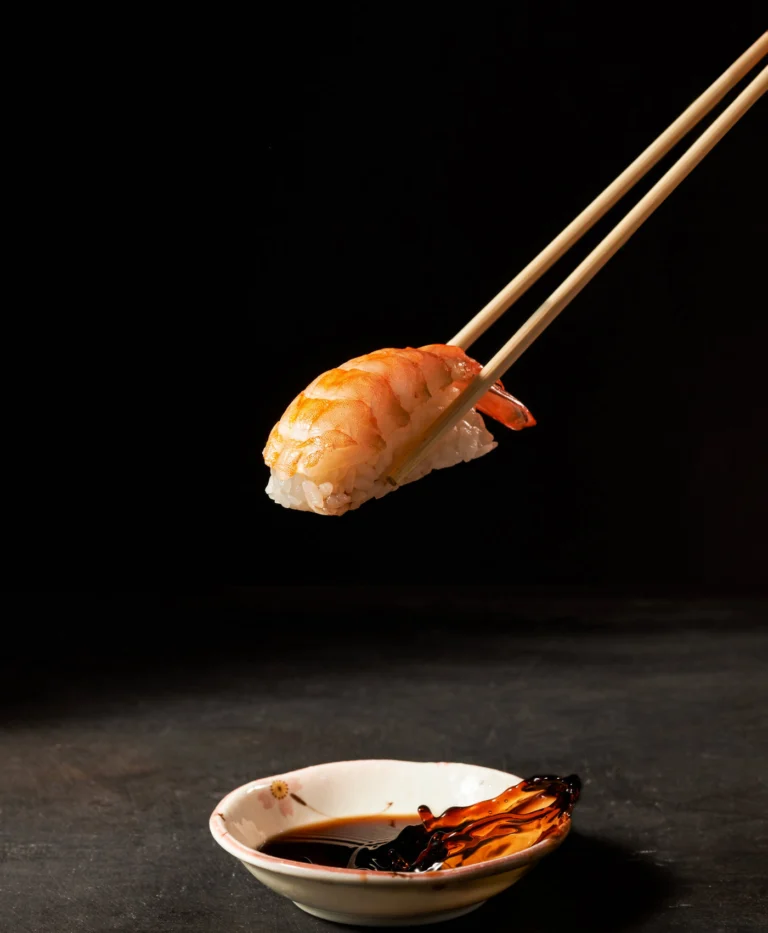
How to Eat Sushi: A Friendly Guide to Soy Sauce, Wasabi, Ginger and Chopstick Etiquette
A relaxed guide to how to eat sushi: hands or chopsticks, dipping in soy, wasabi, ginger, eating order and the chopstick habits to avoid.
Read the guide →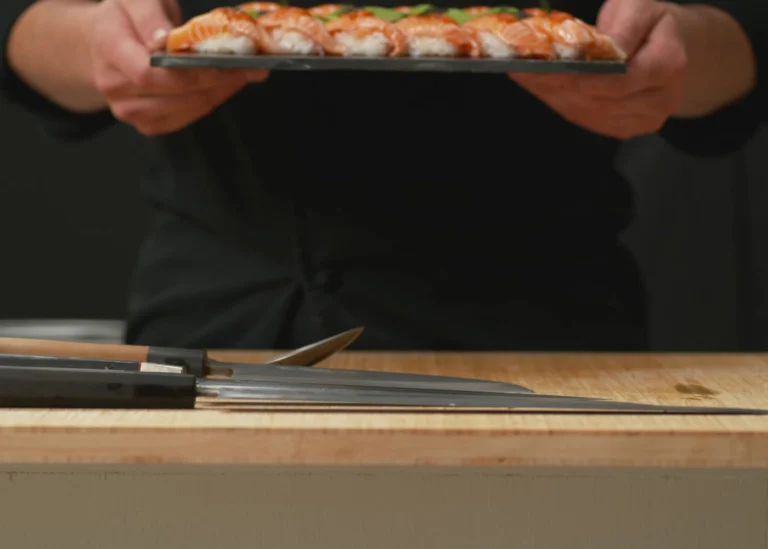
Sushi Catering in Brisbane: How to Plan Sushi Boxes for Office Lunches, Parties and Events
How to plan sushi catering in Brisbane: choosing Sushi Go-En boxes, ordering ahead, invoices, pickup in Salisbury, keeping sushi cool and serving it well.
Read the guide →Find Sushi Go-En in Salisbury, Brisbane
Come to 660 Toohey Road, Salisbury QLD, open Monday to Saturday, 10:30 AM to 8:30 PM (kitchen closes 8 PM, closed Sunday). Walk-ins are always welcome at our sushi train, with fast seating.